Why see the Kecak at Uluwatu
Why see the Kecak at Uluwatu
A uniquely human soundtrack
Kecak uses no instruments at all — the entire soundscape comes from the interlocking vocal chant of dozens of performers, a technique developed in the 1930s from an older Balinese trance ritual, the sanghyang.
The Ramayana, told through chant and fire
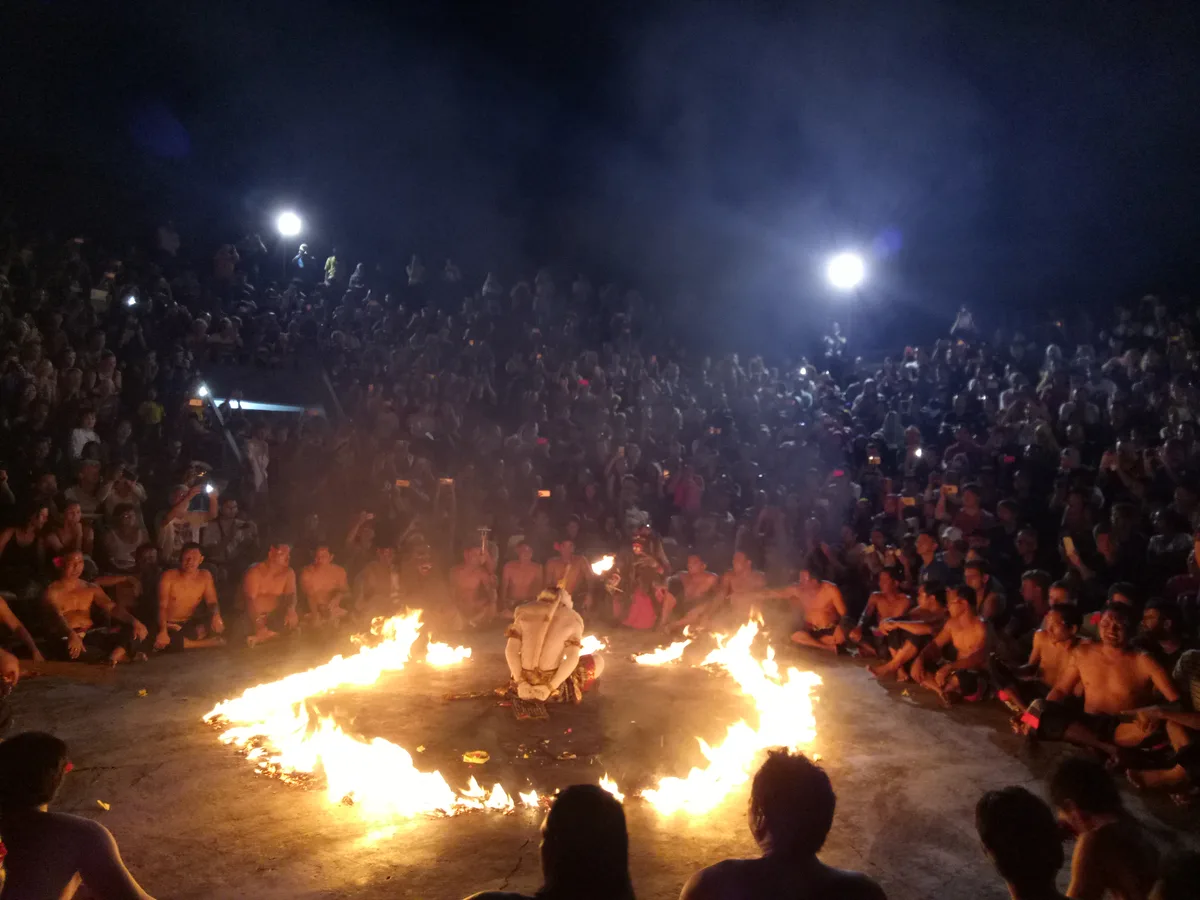
The performance dramatises scenes from the Ramayana — Rama, Sita and the monkey army — building to a fire-trance sequence where a performer kicks through burning coconut husks.
A setting that's part of the show
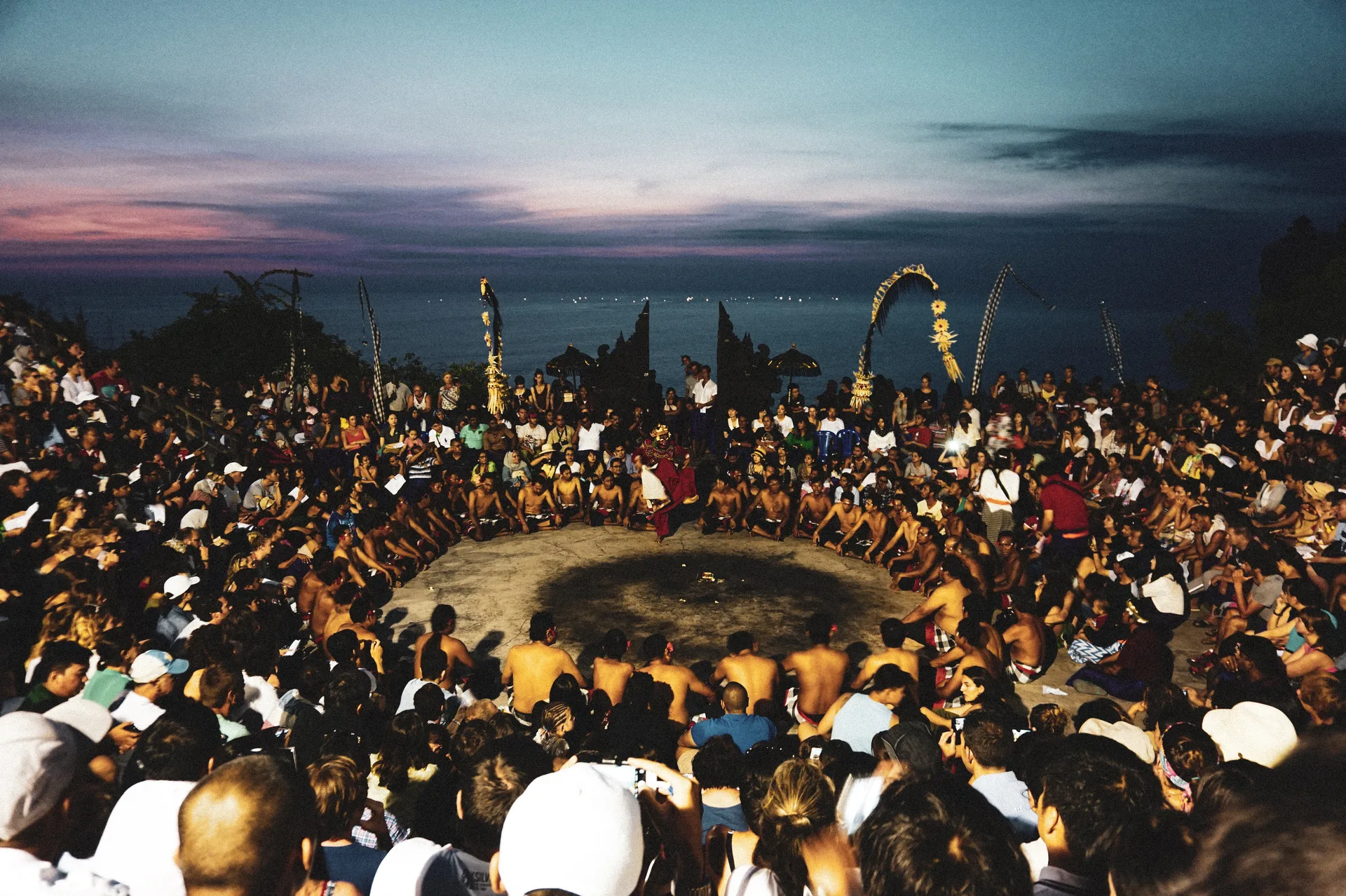
Uluwatu's amphitheatre sits on a sea cliff at the temple's edge, timed so the chant-circle performs as the sun sets directly behind the stage over the Indian Ocean.
How the sunset show unfolds
How the sunset show unfolds
The Uluwatu Kecak is timed precisely around sunset, moving from the temple approach to the fire finale. Here's the shape of the show.
Arrival
The clifftop approach
Visitors arrive at Uluwatu Temple in the late afternoon, with time to explore the cliffside temple grounds (and watch for the resident macaques) before the show.
Seating
Into the amphitheatre
The open-air stone amphitheatre fills as sunset approaches, with the stage set against the ocean horizon.
The chant begins
"Cak-cak-cak"
Dozens of performers form concentric rings and begin the interlocking vocal chant that gives Kecak its name, as the story of the Ramayana begins to unfold.
The Ramayana
Rama, Sita & the monkey army
The performance dramatises key scenes from the epic, the chant-circle acting as both chorus and forest, ocean and battlefield.
Sunset
The sun meets the sea
The show is timed so the sun sets directly behind the stage during the performance — the reason most visitors book this specific time slot.
Fire finale
Walking through fire
The performance closes with a dramatic fire-trance sequence, a performer kicking apart burning coconut husks in a trance state — the night's most talked-about moment.
Uluwatu Temple's clifftop amphitheatre
Uluwatu Temple's clifftop amphitheatre
Uluwatu is a genuine sea temple, one of Bali's holiest, with a purpose-built amphitheatre for the Kecak alongside it.
A clifftop sea temple
Pura Luhur Uluwatu perches on a cliff roughly 70 metres above the Indian Ocean, one of Bali's six key directional temples — the amphitheatre sits just outside the temple's inner sanctum.
Watch your belongings
The temple grounds are home to long-tailed macaques known for snatching sunglasses, hats and phones — keep loose items secured on your approach walk.
Simple stone seating
The amphitheatre offers tiered stone seating around the open performance circle; arriving with time to spare gets you a better sightline for both the sunset and the stage.
On the evening
The show runs outdoors regardless of light rain; dress is casual, and modest dress (covering shoulders/knees) is expected for the adjoining temple area, sarongs often provided at entry.
Kecak at Uluwatu, in pictures
Kecak at Uluwatu, in pictures
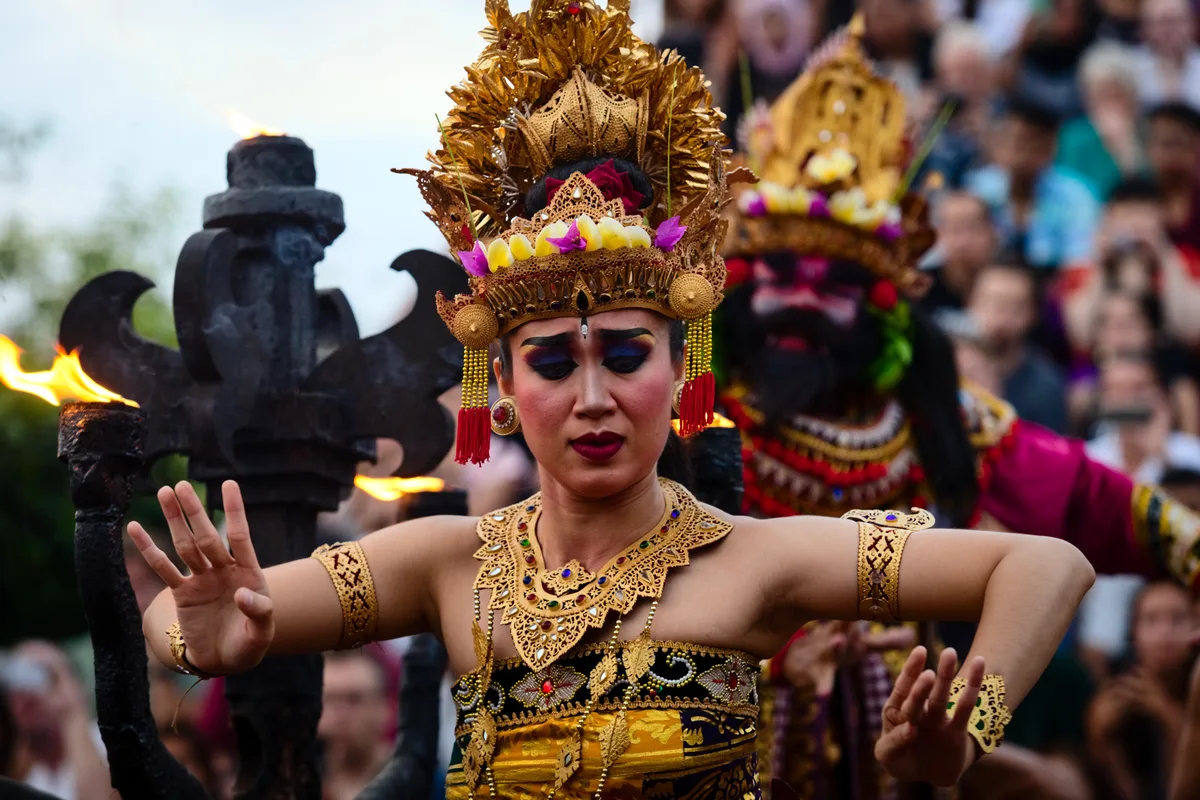
The chant-circle, the fire finale and the clifftop setting.
Ticket options & what's included
Ticket options & what's included
| Option | What it includes | Good to know |
|---|---|---|
| Entry ticket only | Admission to the Kecak performance | The simplest, lowest-cost option |
| Sunset tour with transfer | Above, plus round-trip hotel transfer | Simplest option for a first visit |
| Private tour with dinner | Show, transfer and a Jimbaran seafood dinner | A fuller evening out after the show |
Ways to see the Kecak fire dance
Find a Kecak sunset show for your dates
Every option below is bookable through GetYourGuide, with live availability and the final price shown in your own currency before you pay.
Planning your sunset visit
Planning your sunset visit
Book the right time slot
The show is specifically timed to sunset — check the confirmed local start time for your dates when booking, since it shifts slightly through the year.
Arrive early for a good seat
Amphitheatre seating isn't reserved by row on most tickets, so arriving 30-45 minutes ahead secures a clearer sightline of both the stage and the sunset behind it.
Secure your belongings
The resident macaques around the temple are opportunistic — keep sunglasses, hats and food out of easy reach on the approach walk.
Dress modestly for the temple area
As Uluwatu is an active temple, modest dress is expected near the sanctum; sarongs are usually provided or available to rent at the entrance.
Booking flexibility
Listings offer free cancellation up to 2 days before, so you can lock in a sunset slot without losing flexibility in your Bali itinerary.
Planning a Kecak sunset at Uluwatu
Planning a Kecak sunset at Uluwatu
GEO/FAQ
Uluwatu Kecak show questions
What is the Kecak dance?
Kecak is a Balinese performance built entirely around a chanted "cak" vocal rhythm from dozens of bare-chested performers seated in concentric rings, with no instruments. Developed in the 1930s from an older trance ritual, it dramatises scenes from the Ramayana and typically closes with a fire-trance sequence.
Why is it timed to sunset?
The Uluwatu amphitheatre faces directly out over the Indian Ocean, and the show is scheduled so the chant-circle performs as the sun sets behind the stage — the combination of the chant, the clifftop setting and the sunset is the main draw.
What happens in the fire finale?
The performance closes with a dramatic sequence in which a performer, said to enter a trance state, kicks apart burning coconut husks — a striking, much-photographed climax to the show.
Do I need to arrive early?
Yes — seating in the open-air amphitheatre isn't individually reserved on most tickets, so arriving 30-45 minutes before showtime gets you a clearer view of both the stage and the sunset.
What should I watch out for at the temple?
Uluwatu's resident long-tailed macaques are known for snatching sunglasses, hats and food from visitors — keep loose items secured, especially on the approach walk to the amphitheatre.
Can I combine it with dinner?
Yes — many tour options bundle the Kecak show with a Jimbaran Bay seafood dinner on the beach afterwards. Each option's inclusions and live price are shown in the booking widget, with free cancellation up to 2 days before.
Still deciding which sunset to book?
Leave your email and roughly when you're in Bali — we'll send a short rundown of how the Kecak show and sunset timing work together.